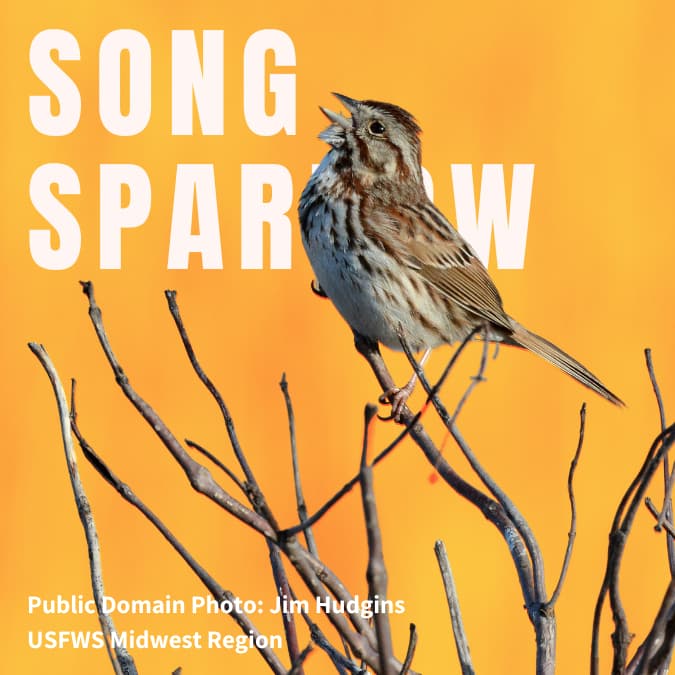
The Song Sparrow (Melospiza melodia)is one of North America’s most abundant birds, with roughly 130 million breeding adults across the continent. Yet inside San Francisco Bay, three of its subspecies evolved the ability to drink saltwater, time their nesting to the tide, and inhabit one of Earth’s most threatened ecosystems. They are vanishing. This is how abundance can mask extinction — and what one of the most ambitious wetland restoration campaigns on the West Coast is doing about it.
On a bright March morning, a small brown bird perches on a garden fence and sings. “The song sparrow, which every child knows, comes first; at least, his voice is first heard. And can there be anything more fresh and pleasing than this first simple strain heard from the garden fence or a near hedge, on some bright, still March morning?” John Burroughs wrote that in 1871 Quote ID: 8-058. He was describing a bird so familiar it had become invisible. The one everyone recognizes and almost no one watches.
That invisibility has consequences. The Song Sparrow has the greatest variation, especially in North America, with 52 named subspecies distributed across one of the widest ranges of any songbird on the continent.
Aleutian Island Song Sparrows weigh three times more than their California cousins. The bird at your feeder and the bird singing on an Alaskan island are, technically, the same species. That range of variation is this article’s starting point — because understanding it is the only way to grasp what is happening, right now, in the tidal marshes of San Francisco Bay.
Conservation: Historical Baseline
In 1871, when John Burroughs was walking the fields and hedgerows of New York State, the Song Sparrow was among the first voices of spring to greet him. “The song sparrow, that universal favorite and firstling of the spring, comes before April, and its simple strain gladdens all hearts,” he wrote Quote ID: 1-060. The word universal meant something. Song Sparrows were everywhere: the lane, the garden, the marsh edge, the weedy lot, the brushy stream bank. Their continental population has since been estimated at approximately 130 million breeding adults5.
Within that abundance, however, evolution had been quietly doing something spectacular in the tidal marshes encircling San Francisco Bay. Three Song Sparrow subspecies — the Alameda (Melospiza melodia pusillula), the San Pablo (M. m. samuelis), and the Suisun (M. m. maxillaris) — had developed adaptations that set them apart from every other Song Sparrow on the continent6. These birds occupied less than 0.0008% of the species’ total range11, yet in that tiny fraction, they had solved problems that no inland Song Sparrow has ever faced.
What the Marshes Made
The most dramatic of those solutions: they can drink saltwater. Inland Song Sparrows living just miles away from the Bay cannot10. The Bay subspecies evolved a distinct cellular mechanism — reinforcement of cell membranes via a gene called MYOF, which allows cells to expand and contract more rapidly in response to salt — a solution different from the one found in Savannah Sparrows, Swamp Sparrows, and Nelson’s Sparrows in the same environment10. These adaptations arose rapidly on an evolutionary timescale, probably within the last 10,000 to 15,000 years10.
The Bay subspecies also developed Saltmarsh Melanism: darker plumage than their inland relatives, serving two simultaneous functions — camouflage against the gray-brown marsh substrate, and resistance to the bacterial feather degradation accelerated by humid, salt-saturated air11. They grew larger bills than upland birds, providing greater surface area for evaporative heat loss in open marshland11. And the Alameda and San Pablo subspecies evolved Tide-Synchronized Breeding: they begin nesting two or more weeks earlier than nearby upland Song Sparrows specifically to time hatching with the lowest annual tides in March, when flood risk to eggs and nestlings is at its seasonal minimum7.
In Burroughs’s era, these birds had roughly 190,000 acres of tidal marsh to call home. San Francisco Bay’s historic wetlands ringed the estuary in a vast, productive mosaic of pickleweed, cordgrass, and tidal channel — among the richest bird habitats on the Pacific Coast.
Conservation: The Decline
The destruction of San Francisco Bay’s tidal marshes is one of the most thorough habitat losses in American history. Since the mid-nineteenth century, diking, salt pond conversion, urban landfill, and agricultural development eliminated approximately 79% of the Bay’s historic tidal marsh7. By the time systematic monitoring began in the twentieth century, the San Pablo Song Sparrow population had already been reduced to roughly one-third of its estimated 1850 size7. Salt ponds alone consumed 25,000 acres of former marsh by the 1950s, owned almost entirely by a single company and managed for salt evaporation rather than wildlife8.
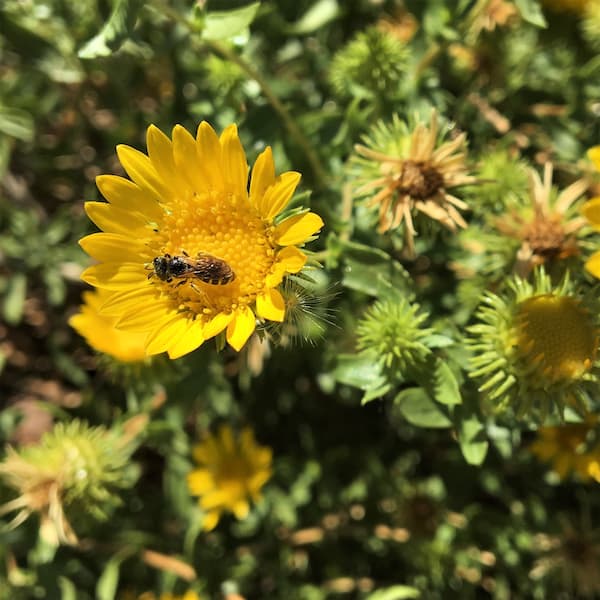
The mechanism of collapse followed a predictable pattern across subspecies. Diking severed the tidal connections that fed and maintained the marshes. Without regular inundation, marsh vegetation shifted away from the pickleweed (Salicornia pacifica) and gumplant (Grindelia stricta) that define ideal Song Sparrow nesting habitat6.
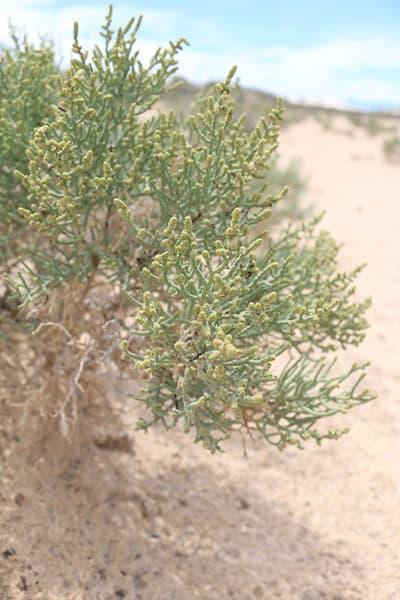
- Pickleweed (photo: White Sands National Park)
- Gumplant (photo: Karleen Vollherbst USFWS Pacific Southwest Region)
The remaining marsh fragments became isolated, reducing the interchange between populations that keeps small groups genetically viable. Population viability analyses later confirmed that fragmented marshes dominated by small parcels — fewer than ten breeding pairs — were acutely vulnerable to local extinction from catastrophic events: storm flooding, predation pressure, or extended drought7.
The Amak Island Song Sparrow (M. m. amaka), an Alaskan population, offers the sharpest illustration of how quickly these losses can become permanent. The birds were last recorded in 1988, after habitat destruction had devegetated their island and a listing petition filed in 1980 languished on the federal candidate list without protection16. A population gone within living memory, in a species with 130 million continental representatives.
Cowbirds and the Habitat Paradox
Brown-headed Cowbird parasitism compounded the pressure on Bay subspecies and upland populations alike. Peter Arcese — then at the University of British Columbia, now one of the world’s foremost Song Sparrow researchers — co-led foundational work showing that cowbird parasitism was a prerequisite for the high nest failure rates observed in Song Sparrow populations; cowbirds were predating unparasitized nests to create additional laying opportunities15. At riparian Song Sparrow sites in British Columbia, natural parasitism rates exceeded 60% of nests in control years; when female cowbirds were experimentally removed, parasitism dropped to as low as 18% and seasonal fecundity roughly doubled at removal sites compared to controls14. For subspecies already squeezed into fragmented marshes, any additional reproductive drag was consequential.
The habitat paradox sharpened through the twentieth century: the Song Sparrow as a continental species remained robust, rated a low Continental Concern Score of 8 out of 20 by Partners in Flight5, with populations in Alaska and British Columbia stable or increasing3. Meanwhile, three of its subspecies in a single estuary faced the kind of pressure typically associated with species far rarer. Abundance at the species level masked crisis at the subspecies level — a lesson conservation biology is still learning to account for.
Conservation: The Recovery
The turn came incrementally, driven by science and sustained by institutional ambition.
The South Bay Salt Pond Restoration Project — the largest tidal wetland restoration effort on the West Coast — began in 2003, when the late Senator Dianne Feinstein helped broker the acquisition of 15,100 acres of industrial salt ponds from Cargill Inc.8. The 50-year restoration plan targets conversion of at least 50% of that acreage to functioning tidal marsh, with levee breaches restoring tidal flow and allowing natural marsh vegetation to re-establish8. By December 2023, more than 3,300 acres across the South Bay had been opened to tidal action, with the breach of a 300-acre former industrial pond in Menlo Park marking the project’s twentieth anniversary8. A new Song Sparrow Spur Trail at Pond A2W in Mountain View, opened in February 2026, brought public access directly into restored habitat.
In the research sphere, the Arcese Protocol — systematic population monitoring, viability modeling, and conservation genetics applied simultaneously to the same species complex — produced findings that both quantified the crisis and offered grounds for cautious optimism. Population viability analyses of the San Pablo subspecies demonstrated that while the historic population was three times the modern size, the current population’s risk of extinction was low as long as restoration concentrated on creating larger continuous habitat blocks rather than scattered small parcels7.
The Science of Recovery
Katherine Carbeck, a PhD candidate in UBC’s Department of Forest and Conservation Sciences, led a 2023 study in Nature Communications that sequenced and compared 79 genomes from nine Song Sparrow subspecies — including the five small California subspecies comprising the Bay populations — across a nearly 300% range in body mass9. The team identified nine candidate genes in three genomic regions associated with body mass variation, with eight specific genetic variants aligning with Bergmann’s Rule predictions9. The implications for conservation were direct: these birds had evolved measurable local adaptations — in body size, osmoregulation, plumage — in a matter of centuries. The Citizen Science Revolution of population-level genomics was demonstrating that evolution doesn’t require geological time.
Meanwhile, field monitoring confirmed that restoration was working. Multi-species monitoring in the North Bay and Suisun areas showed Song Sparrow population indicators increasing, while South Bay populations — benefiting from the restoration work despite more limited remaining habitat — remained stable6.
Conservation: Current Status
The Bay subspecies are not yet safe. They exist inside a narrow Ecological Threshold defined by two intersecting pressures: the pace of habitat restoration, and the pace of sea level rise.
The South Bay Salt Pond Restoration Project must not only rebuild marsh that was destroyed but build marsh that can survive what is coming. Sea level rise is the next existential threat to the Alameda, San Pablo, and Suisun Song Sparrows: marshes that cannot migrate upslope — because development has replaced the upland transition zone — will simply drown as tidal heights increase over coming decades8. Phase 2 construction at Eden Landing and Ravenswood now specifically includes construction of gently sloping upland transition zones designed to allow marsh to migrate inland as sea levels rise8.
Arcese put the conservation equation plainly in response to the 2023 genomics findings: Song Sparrows have substantial capacity for adapting to local environmental change, “as long as we maintain habitat conditions that facilitate the movement of individuals and genes between populations.”9 The birds evolved these local adaptations. They can continue to evolve. But only if the habitat remains — and only if the populations remain large enough to allow natural selection to operate.
Continentally, the Song Sparrow’s overall population has declined by approximately 27% between 1966 and 2019, according to the North American Breeding Bird Survey2, with a cumulative loss of about 25% between 1970 and 20145. These are headline numbers for a species not on any watch list — a reminder that “common” and “stable” are not synonyms.
Identification
Quick ID Box
| Feature | Song Sparrow |
|---|---|
| Size | Robin-sized sparrow; 4.7–6.7 in; variable across subspecies |
| Crown | Brown-streaked; gray median stripe |
| Face | Gray with a broad brown eyestripe through the eye |
| Breast | White, heavily streaked brown; central breast spot (diagnostic, but not always present) |
| Tail | Long, rounded; pumped downward in flight |
| Bill | Moderate; larger in coastal subspecies |
| Habitat | Wet edges, brushy thickets, marshes, gardens, suburbs |
| Range | Year-round across most of North America |
The Song Sparrow’s most reliable field mark is its behavior as much as its plumage: a streaky brown sparrow that perches on a low shrub, leans back, and launches into a stuttering, complex song1. The dark brown central breast spot — where the streaks converge into a single blotch — is the mark beginners reach for, but it varies in size and conspicuousness across individuals and subspecies.
What makes identification genuinely challenging is the species’ staggering regional variation. Coastal Song Sparrows from the Pacific Northwest are dark and heavily streaked; desert subspecies of the Southwest run pale and fine-lined; Aleutian Island birds look like entirely different species — massive, gray, and long-winged1. The Bay Area’s endemic subspecies — Alameda, San Pablo, Suisun — show the darker, grayer tones of Saltmarsh Melanism, with grayish base color and yellowish belly coloration distinct from inland relatives11. If you’re birding San Francisco Bay marshes, expect a different-looking bird than the Song Sparrow at your backyard feeder.
Flight is diagnostic even at a glance: low, direct, with the tail pumping downward in a distinctive bouncing motion as the bird moves between cover1. This tail-pump is one of the fastest ways to rule in Song Sparrow when a streaky bird flushes ahead of you on a trail.
Vocalization
John Burroughs encountered a Song Sparrow one afternoon by a trout stream and stopped fishing to listen. “He had five distinct songs,” Burroughs wrote, “each as markedly different from the others as any human songs, which he repeated one after the other. He may have had a sixth or a seventh, but he bethought himself of some business in the next field, and flew away before he had exhausted his repertory.” 17
Burroughs was watching something that ornithologists have since confirmed in detail. Each male Song Sparrow knows up to 20 distinct song types with as many as 1,000 improvised variations on those themes2. But what a 2022 Duke University study established — recording more than 30 birds for five hours a day in the backwoods of northwestern Pennsylvania — is that males are not singing randomly. They track what they have sung for up to 30 minutes, curating both their current set and the next one12. The more a male repeats a given song, the longer he waits before returning to it. It is an avian Spotify shuffle: the bird keeps its own playlist fresh, possibly to sustain female attention12. Song Sparrow song memory spans 360 times longer than the previous record holder, the canary12.
Learning to Listen
Burroughs’s “little squeaky thing” problem — that the untrained ear can miss entirely what trained birders love — has a real biological explanation. One of our popular writers on birds once read Henry van Dyke’s poem on the Song Sparrow to two city girls before taking them birding, so they would know what to listen for. When a Song Sparrow sang from a roadside shrub, they could barely make it out, and one finally asked: “What! that little squeaky thing?” 17 The song that registered as nothing to untrained ears contains, in fact, a sonic signature — the opening da-da-da-DUM that mirrors Beethoven’s Fifth — followed by buzzy trills and liquid warbles that vary in pattern across regional dialects. Learning to hear it is one of birding’s great early pleasures.
Behavior and Nesting
The Song Sparrow’s nesting is as adaptable as its range. Nests are built low — on the ground, in a grass tussock, in a low shrub — and females exercise surprising site fidelity: the same ideal spot, like the base of a rose bush or a hollow under a grass hummock, will often be claimed by successive generations of entirely new birds1.
“The song sparrow, which is a ground builder,” Burroughs noted, “has been known to build in the knothole of a fence rail…” Quote ID: 4-076 That opportunism is a real field observation: Song Sparrows will nest in elevated sites when ground cover is scarce. They typically raise two to three broods per season, with clutches of three to five eggs and incubation periods of 13 to 15 days2. Up to 20% of Song Sparrows sire young with multiple mates in a given breeding season2.
Female Song Sparrows are not passive participants in mate selection. Laboratory studies established that females strongly prefer males whose songs most accurately match their song tutors — measuring learning quality as a proxy for developmental fitness13. A male who copies his tutor songs with high fidelity — in fine structural properties and syllable sequence — is advertising that he survived early developmental stress well enough to build an accurate neural template. Females who choose such males are selecting for heritable cognitive capacity13. Burroughs’s trout-stream sparrow cycling through five distinct songs was not performing arbitrarily; he was demonstrating his curriculum.
Foraging and Brood Parasitism
The Sit-and-Wait Strategy defines the Song Sparrow’s general foraging approach: walking or hopping along the ground and through low vegetation, picking insects and seeds from the surface, rarely pursuing prey far1. Summer diet tilts heavily toward insects — weevils, beetles, caterpillars, grasshoppers, spiders — while seeds dominate in winter2. Song Sparrows are regular feeder visitors, reliably attracted to millet and cracked corn scattered on the ground or offered on low platform feeders.
Brown-headed Cowbird brood parasitism is a genuine pressure on Song Sparrow productivity. Cowbirds are known to predate unparasitized Song Sparrow nests to create additional laying opportunities — a form of nest destruction that makes cowbird presence, not just parasitism itself, the driver of nest failure rates15. Cowbird removal experiments at riparian Song Sparrow sites in British Columbia demonstrated that seasonal fecundity roughly doubled when parasitism was experimentally suppressed14. There is no nest box program for Song Sparrow; conservation recovery for the Bay subspecies centers entirely on tidal marsh habitat restoration.
Comparison Species
| Feature | Song Sparrow | Lincoln’s Sparrow | Savannah Sparrow | Fox Sparrow |
|---|---|---|---|---|
| Breast | Bold thick streaks; central spot | Fine “pencil-drawn” streaks on buff breast band | Thinner streaks; browner overall | Blotchy triangular spots; no central spot |
| Tail | Long, rounded | Slightly shorter | Notched (key mark) | Short, rounded |
| Face | Gray with brown eyestripe | Pale eye ring; neater, crisper | Yellowish lores (patch in front of eye) | Variable; no gray face |
| Size | Medium sparrow | Slightly smaller | Slimmer, shorter bill | Larger and bulkier |
| Habitat | Wet edges, marshes, suburbs | Boreal bogs; widespread migrant | Open fields, coastal marshes | Winter visitor; brushy areas |
| Key tip | Tail-pump in flight; song from exposed perch | Rarely sings in migration; creeps through vegetation | Flushes high and far | Conspicuously large; scratches in leaf litter |
Frequently Asked Questions
What is the central spot on the Song Sparrow’s chest, and is it a reliable field mark? The dark blotch where breast streaks converge at the center of the chest is the Song Sparrow’s most-cited mark — but treat it as supporting evidence, not a definitive ID. Some individuals show it clearly; others, depending on age, subspecies, or viewing angle, do not. Use it in combination with the long rounded tail, gray face, brown eyestripe, and that distinctive tail-pumping flight.
How do I tell a Song Sparrow from a Lincoln’s Sparrow or a Savannah Sparrow? Lincoln’s Sparrow is the number-one confusion species during migration and winter. Look for the buffy breast band with fine, pencil-thin streaking (vs. Song Sparrow’s bold, coarse streaks) and the pale eye ring. Lincoln’s tends to creep through vegetation rather than perch openly. Savannah Sparrow has a notched tail (not rounded), yellowish lores in front of the eye, and a slimmer build; it flushes higher and farther than a Song Sparrow. Pacific coast Savannah Sparrows can show heavy dark streaking — but the notched tail and yellowish lores still separate them.
Why does the Song Sparrow look so different depending on where I live? The Song Sparrow is likely the most polytypic bird in North America, with 52 named subspecies and roughly 25 recognized1. Body mass varies nearly 300% across the range — from 17 grams in the smallest California marsh subspecies to 50 grams in Aleutian Island giants9. This variation is not random; it reflects local adaptation to climate, habitat, and diet, and has a genetic basis now confirmed by whole-genome sequencing9. Despite looking dramatically different, these populations share enough genetic flow that species-level cohesion has been maintained.
What does the Song Sparrow’s song sound like — does it really echo Beethoven’s Fifth? The most common suburban song pattern does begin with three short notes followed by one longer note — the same da-da-da-DUM rhythm that opens Beethoven’s Fifth Symphony, a coincidence birders have exploited as a memory device for generations. The full song is more complex: an opening series of two or three sharp chips, then a buzzy trill, then a liquid warble. Males know up to 20 distinct song types and track their own 30-minute song history to keep their playlist fresh12.
Do Song Sparrows come to bird feeders, and how can I attract them? Yes — Song Sparrows are regular feeder visitors, most reliably attracted to white proso millet and cracked corn scattered directly on the ground or offered on a low, open platform feeder1. They also respond strongly to water features: a shallow birdbath or ground-level dripper near brushy cover is excellent Song Sparrow habitat. Letting a garden bed go weedy along a fence line — ragweed, blackberries, native grasses — creates nesting and foraging territory that Song Sparrows exploit year-round.
How many times does a Song Sparrow nest per season, and where? Song Sparrows typically raise two to three broods per breeding season2. Nests are almost always built low — on or near the ground in dense vegetation, in a grass tussock, or in a low shrub — though they occasionally use elevated sites like fence rail knotholes when ground cover is scarce. Females show strong site fidelity to productive nest locations, which may be reused by successive generations of birds1.
Are Song Sparrow populations declining, and what about the Bay subspecies? Continentally, Song Sparrow populations have declined approximately 27% between 1966 and 2019, according to the North American Breeding Bird Survey3 — a significant loss for a species not on any endangered list. In San Francisco Bay, the three endemic tidal marsh subspecies face a more acute situation: 79% of their historic habitat was destroyed by the mid-twentieth century7, and the San Pablo subspecies now numbers roughly one-third of its estimated 1850 population7. Active restoration through the South Bay Salt Pond Restoration Project has opened more than 3,300 acres to tidal action since 20038, with cautiously positive population trends at North Bay and Suisun sites6.
Are Song Sparrows affected by brown-headed cowbird brood parasitism? Yes, and more significantly than their abundance might suggest. Brown-headed Cowbirds are among the most common parasites of Song Sparrow nests, and Arcese’s island study found that cowbird presence — not just the parasitism itself — drove nest failure rates, as female cowbirds predate unparasitized nests to create future laying opportunities15. Where cowbirds are absent or experimentally removed, Song Sparrow fecundity roughly doubles14. For the Bay subspecies, which nest in marsh habitats that provide some natural cowbird exclusion, this pressure is lower than for edge-nesting populations — but it remains a factor in total reproductive output.
Key Takeaways
- The Habitat Paradox at work: The Song Sparrow is one of North America’s most abundant birds (approximately 130 million breeding adults)5, yet three of its subspecies face local extinction inside a single California bay — a case study in why species-level conservation metrics miss subspecies-level crises.
- Saltwater drinking is not universal: The Alameda, San Pablo, and Suisun Song Sparrows can drink saltwater; inland Song Sparrows just miles away cannot10. This single adaptation — evolved through the MYOF gene in approximately 10,000–15,000 years — represents some of the fastest documented local adaptation in North American birds.
- The Carbeck-Arcese genomics finding (2023): Whole-genome sequencing identified 8 specific genetic variants in 4 genes associated with body mass variation across subspecies9. Song Sparrows have a demonstrated capacity for rapid local adaptation — but only “as long as we maintain habitat conditions that facilitate the movement of individuals and genes between populations.”
- The South Bay Salt Pond Restoration Project: The largest tidal wetland restoration project on the West Coast — targeting 15,000 acres over 50 years — has opened more than 3,300 acres since its 2003 launch8. Population monitoring shows positive trends at restoration sites6.
- Continental decline is real, even without watch-list status: A 27% drop in Song Sparrow populations since 19662 in a species rated low conservation concern nationally is a warning that abundance does not equal stability.
- Burroughs’s firstling endures — for now: “The song sparrow, that universal favorite and firstling of the spring, comes before April, and its simple strain gladdens all hearts.” Quote ID: 1-060 That sentence remains true on the continent. Whether it remains true inside San Francisco Bay’s remnant marshes depends on decisions being made right now about levees, tidal flow, and upland transition zones.
Bibliography
Modern Scientific Sources
[1] Cornell Lab of Ornithology. (2024). Song Sparrow — Overview. All About Birds. https://www.allaboutbirds.org/guide/Song_Sparrow/overview
[2] Cornell Lab of Ornithology. (2024). Song Sparrow — Life History. All About Birds. https://www.allaboutbirds.org/guide/Song_Sparrow/lifehistory
[3] Sauer, J. R., D. K. Niven, J. E. Hines, D. J. Ziolkowski Jr., K. L. Pardieck, J. E. Fallon, and W. A. Link. (2019). The North American Breeding Bird Survey, Results and Analysis 1966–2019. Version 2.07.2019. USGS Patuxent Wildlife Research Center. https://www.usgs.gov/data/north-american-breeding-bird-survey-analysis-results-1966-2019
[4] Minnesota Biological Survey / Minnesota Breeding Bird Atlas. (2019). Song Sparrow (Melospiza melodia). Minnesota Department of Natural Resources. [Background research source; continental statistics cited in this atlas are attributed to Rosenberg et al. 2016 / Partners in Flight, cited directly as ref-5.] https://mnbirdatlas.org/species/song-sparrow/
[5] Partners in Flight Science Committee. (2020). Avian Conservation Assessment Database, Version 2020. Bird Conservancy of the Rockies. https://pif.birdconservancy.org/avian-conservation-assessment-database-scores/
[6] San Francisco Bay Bird Observatory / Point Blue Conservation Science. (2024). Tidal Marsh Breeding Birds. SF Bay State of the Birds. https://sfbaystateofthebirds.org/tidal-marsh-breeding-birds/
[7] Nur, N., Spautz, H., Stralberg, D., Chan, Y., and Arcese, P. (2006). Tidal saltmarsh fragmentation and persistence of San Pablo Song Sparrows (Melospiza melodia samuelis): Assessing benefits of wetland restoration in San Francisco Bay. U.S. Geological Survey. https://pubs.usgs.gov/publication/70028590
[8] U.S. Fish and Wildlife Service. (2023). Historic breach opens San Francisco Bay to tidal marsh restoration. USFWS Press Release. https://www.fws.gov/press-release/2023-12/historic-breach-opens-san-francisco-bay-tidal-marsh-restoration
[9] Carbeck, K., Arcese, P., Lovette, I., Pruett, C., and Walsh, J. (2023). Candidate genes under selection in song sparrows co-vary with climate and body mass in support of Bergmann’s Rule. Nature Communications, 14, 6974. https://www.nature.com/articles/s41467-023-42786-2
[10] Walsh, J., Benham, P. M., Deane-Coe, P. E., Arcese, P., Butcher, B. G., Chan, Y. L., Cheviron, Z. A., Elphick, C. S., Kovach, A. I., Olsen, B. J., Shriver, W. G., Winder, V. L., and Lovette, I. J. (2019). Genomics of rapid ecological divergence and parallel adaptation in four tidal marsh sparrows. Evolution Letters. DOI: 10.1002/evl3.126. https://www.eurekalert.org/news-releases/785738
[11] Cornell Lab of Ornithology / Living Bird. (2020). Surviving and Thriving in a Saltmarsh — Here’s How 4 Species Manage It. All About Birds. https://www.allaboutbirds.org/news/surviving-and-thriving-in-a-saltmarsh-heres-how-4-species-manage-it/
[12] Searcy, W. A., Soha, J., Peters, S., and Nowicki, S. (2022). Long-distance dependencies in birdsong syntax. Proceedings of the Royal Society B, 289(1967). DOI: 10.1098/rspb.2021.2473. https://today.duke.edu/2022/01/birds-shuffle-and-repeat-their-tunes-keep-audience-listening
[13] Nowicki, S., Searcy, W. A., and Peters, S. (2002). Quality of song learning affects female response to male bird song. Proceedings of the Royal Society B. PMC: 1691117. https://pmc.ncbi.nlm.nih.gov/articles/PMC1691117/
[14] Smith, J. N. M., Taitt, M. J., and Zanette, L. (2002). Removing Brown-headed Cowbirds increases seasonal fecundity and population growth in Song Sparrows. Ecology, 83(11), 3037–3047. https://publish.uwo.ca/~lzanette/papers/smith_et_al_2002.pdf
[15] Arcese, P., Smith, J. N. M., and Hatch, M. I. (1996). Nest predation by cowbirds and its consequences for passerine demography. Proceedings of the National Academy of Sciences, 93(10), 4608–4611. https://www.pnas.org/doi/abs/10.1073/pnas.93.10.4608
[16] Suckling, K., Slack, R., and Nowicki, B. (2004). Extinction and the Endangered Species Act. Center for Biological Diversity. [Amak Island Song Sparrow (Melospiza melodia amaka) listed in Table 2 and Table 5: last seen 1988; listing petition filed 1980, placed on candidate list 1982, never protected.] https://www.biologicaldiversity.org/publications/papers/ExtinctAndESA.pdf
[17] Burroughs, J. (1904). Ways of Nature. Boston: Houghton Mifflin. [Smithsonian Libraries copy: https://www.si.edu/object/ways-nature-john-burroughs:siris_sil_101528]
Historical Sources
Return of the Birds: A John Burroughs Wake-Robin Revival (2022) 44from26. (Peter Meddick, editor, 2022), audiobook on Audible.
Quote 8-058: On the song sparrow arriving first — its simple strain heard from the garden fence on a bright, still March morning. Source
Quote 1-060: On the song sparrow as universal favorite and firstling of the spring, its strain gladdening all hearts before April. Source
Quote 4-076: On the song sparrow as ground builder, known to nest in the knothole of a fence rail. Source
Gabrielson, I. N., and Lincoln, F. C. (1951). The races of Song Sparrows in Alaska. The Condor, 53(5), 250–255. https://www.jstor.org/stable/1364957 [Original formal description of Melospiza melodia amaka; type specimen Amak Island, July 13, 1925.]